In my previous post, “3D Printer, 10 Years Later,” I reflected on the journey from endlessly tweaking a stubborn machine to finally enjoying what 3D printing is actually about – creating useful things. This time, the story shifts a bit. It’s not about the printer. It’s about going back to something I hadn’t touched in nearly 25 years: 3D modeling.
A familiar feeling after a long break
Somewhere in the late 90s and early 2000s, I spent hours creating 3D renders and short animations. Back then, it felt like magic – turning imagination into something visual, frame by frame. Life, career, and responsibilities slowly pushed that hobby aside.
Fast forward to today, and I found myself opening a 3D modeling tool again.
And surprisingly… it felt familiar.
Not in a “I still remember all the shortcuts” kind of way – but in the way your brain starts reconnecting pieces faster than expected. Concepts like positioning in 3D space, thinking in volumes instead of flat shapes, and visualizing the final result – they came back quicker than I thought they would.
Choosing the right tool (for me)
Getting back into modeling meant finding the right software. I tried a few options before settling on what works best for me right now.
- Tinkercad – Great for absolute beginners and quick ideas, but I quickly hit its limits. It’s simply too basic for anything beyond very simple models.
- SketchUp
A surprisingly good experience for entry-level design. It’s intuitive and easy to pick up, which makes it great for quickly bringing simple ideas to life. Still, something about it just didn’t feel quite right for me long-term, it didn’t ‘clicked’ in the way I needed. - FreeCAD – Extremely powerful, but also extremely… demanding. It’s clearly built with engineering and CAD workflows in mind. For someone looking to ease back into creative modeling, it felt like too steep a hill to climb.
- Autodesk Fusion 360 (free personal licence) – This one clicked. It strikes a balance I didn’t expect – intuitive enough to get started quickly, yet powerful enough to grow into. It doesn’t feel limiting, but it also doesn’t overwhelm you from the start.
For me, Fusion 360 became that “just right” tool.
First model: Make it useful
I didn’t want my first model to be decorative. I wanted it to solve a real problem.
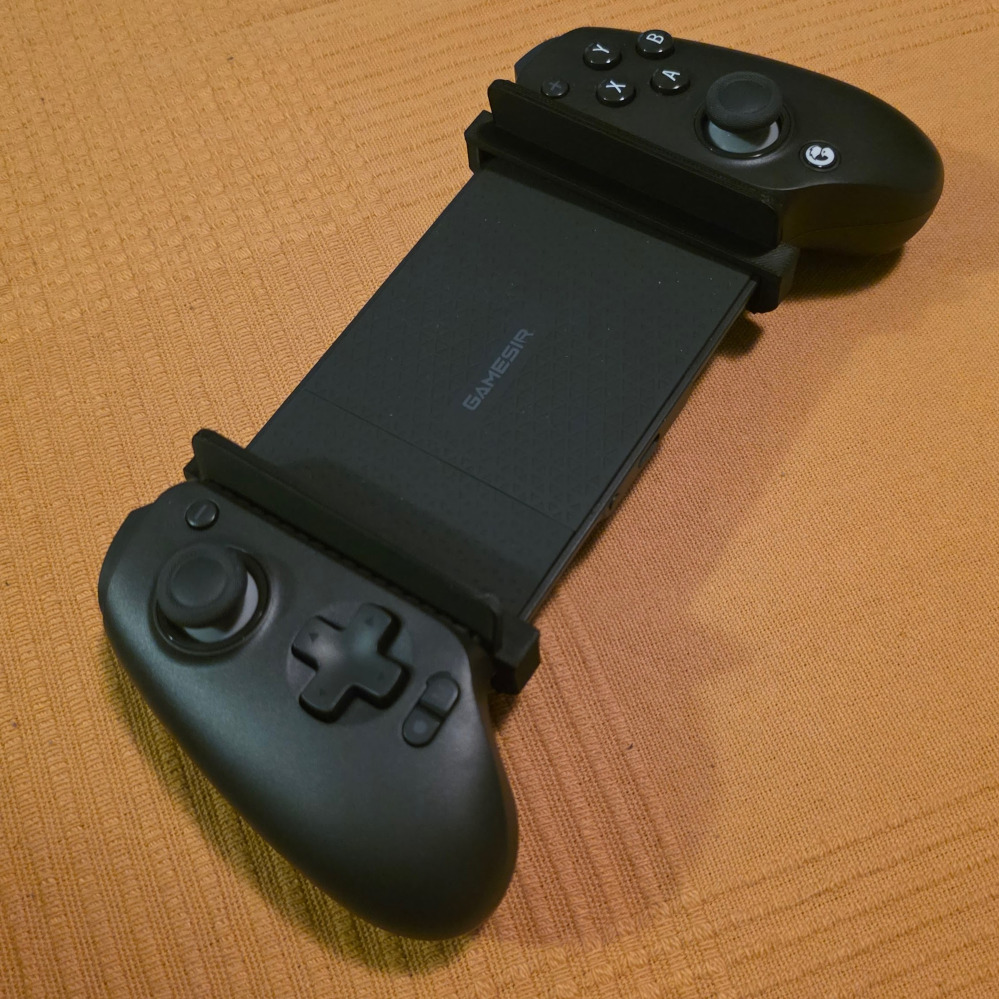
I’m using a Gamesir G8+ Bluetooth gaming controller paired with a Samsung Galaxy Z Fold7. The problem? The phone doesn’t sit firmly, especially when it’s in its case. It works, but not in a way that inspires confidence.
So I designed a pair of custom brackets.
Nothing fancy. No artistic ambition. Just a practical solution:
- snug fit for the phone
- stable positioning
- compatible with the case
And honestly – that made the whole experience far more satisfying. Instead of printing yet another test cube or figurine, I printed something I actually needed.
From idea to object
There’s something uniquely rewarding about this process:
- You notice a problem
- You design a solution
- You hold that solution in your hand a few hours later
That loop is addictive.
And this time, unlike 10 years ago, I’m spending far less time fighting the printer and far more time actually creating.
Giving something back
This project will also be my first upload to MakerWorld, Printables, Creality Cloud, Cults3D, Thingverse, Thangs, PinShape, Makeronline, Printpal 🙂
It feels like the right moment to move from just consuming what others have built to contributing something of my own – even if it’s a small, niche accessory. The 3D printing community has always been incredibly generous, and this is my way of giving a little back.
Maybe someone out there has the same problem. Maybe this saves them a few hours. Or maybe it inspires them to start modeling something themselves.
What’s next?
If this first step taught me anything, it’s that I shouldn’t have waited 25 years.
Modeling isn’t just a technical skill, it’s a way of thinking. And once you reconnect with it, ideas start appearing everywhere:
- things you could improve
- things you could fix
- things you could customize
This bracket is just the beginning.

Leave a Reply