As I recently got back into 3D modeling (a hobby I wrote about in one of my previous posts) I found myself in a strangely familiar situation.
I jumped straight into designing.
No clear idea fully defined.
No structured plan.
Just pure “I can do it” energy.
And while that mindset has served me well many times before, this time it also reminded me (once again) why Business Analysis and Project Management exist in the first place.
The Setup: Experience meets overconfidence
To be fair, I didn’t start from zero.
My background includes:
- Early experience with 3D modeling (years ago)
- Technical high school, drawing precise blueprints using rapidograph
- Hands-on work with one of the first DIY 3D printers
So naturally, I thought: “I’ve got this.”
And I did… eventually.
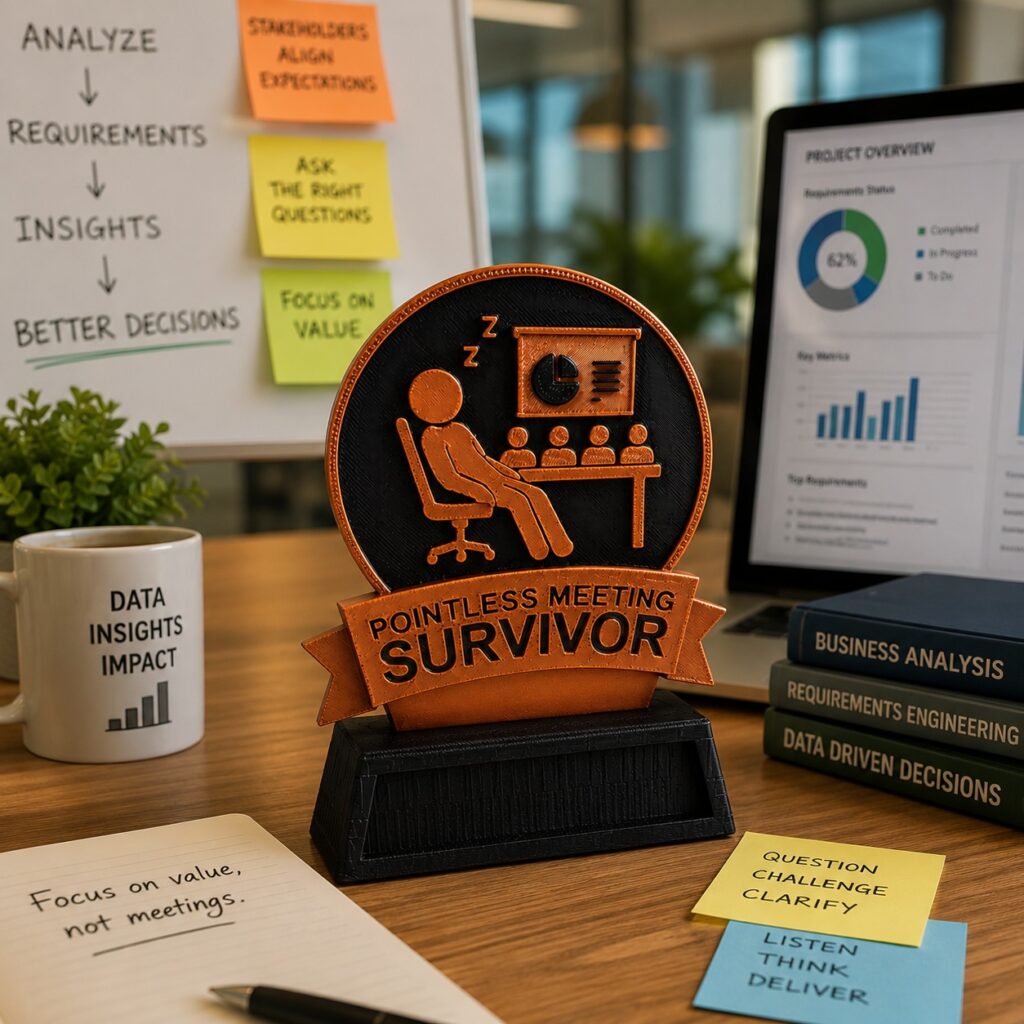
I managed to turn an idea into a physical object – a 3D-printed desk decoration that now exists in the real world.
Still debating whether it should be placed in my office, though 🙂
The Reality: Rework, rework, rework
What I didn’t do was:
- Clearly define what I was building
- Think through the full workflow
- Research specific constraints (like multi-color printing)
The result?
Several iterations.
Repeated rework in Fusion 360.
Time spent fixing things that could have been avoided.
In other words – I skipped the fundamentals I’ve been professionally advocating for years.
Lessons Learned (The hard way… again)
1. The Business Analyst in Me Should Have Spoken First
Before opening any CAD tool, I should have asked myself:
- What exactly am I trying to build?
- What are the functional and aesthetic requirements?
- What constraints do I have?
Instead, I went straight into execution.
That’s not creativity – that’s improvisation without direction.
2. The Project Manager should have planned the journey
A bit of upfront research would have saved time:
- How does multi-color 3D printing actually work?
- What design decisions affect printability?
- What is the optimal workflow?
Without this, I was essentially “discovering the process” while executing it.
That’s expensive – in any domain.
The Saving Grace: Parametric design
Fortunately, tools like Autodesk Fusion 360 are incredibly forgiving.
Parametric modeling allows you to:
- Go back in time
- Adjust earlier decisions
- Avoid rebuilding everything from scratch
Without that, this project would have been significantly more painful.
The Bigger Picture: This isn’t about 3D modeling
This experience is just a small-scale version of something much bigger.
It applies directly to:
- Software development
- Product design
- Any kind of structured work
Yes, you can:
- Jump in quickly
- Work hard
- Eventually succeed
But the real question is:
Were you efficient? Were you effective?
The hidden cost of skipping the basics
When the work is done, most people move on.
But what about:
- Future modifications?
- Scaling?
- Enhancements?
If the foundation isn’t solid, every future change becomes:
- Harder
- Slower
- More expensive
And often, we end up calling it “refactoring”…
…when in reality, we’re starting over.
Final Thought
Bringing Business Analysis and Project Management into a process might feel like overhead at the beginning.
But over time, it becomes a multiplier:
- Better clarity
- Fewer mistakes
- Faster delivery
- Easier future changes
I did finish my model.
But next time, I’ll try to remember:
Just because you can jump straight into execution – doesn’t mean you should.
And maybe… just maybe… I’ll stop calling it “agile” when I do.
And, of course, feel free to grab that 3D model at Makerworld – happy printing!

Leave a Reply